

Personal Finance
Where to Park Your Cash in Singapore: 6 Low-Risk Options Compared (2026)
Compare high-yield savings accounts, fixed deposits, SSBs, T-bills, money market funds and cash management accounts by access, risk and returns.
Arki Finance
11/3/2026
13 min
read
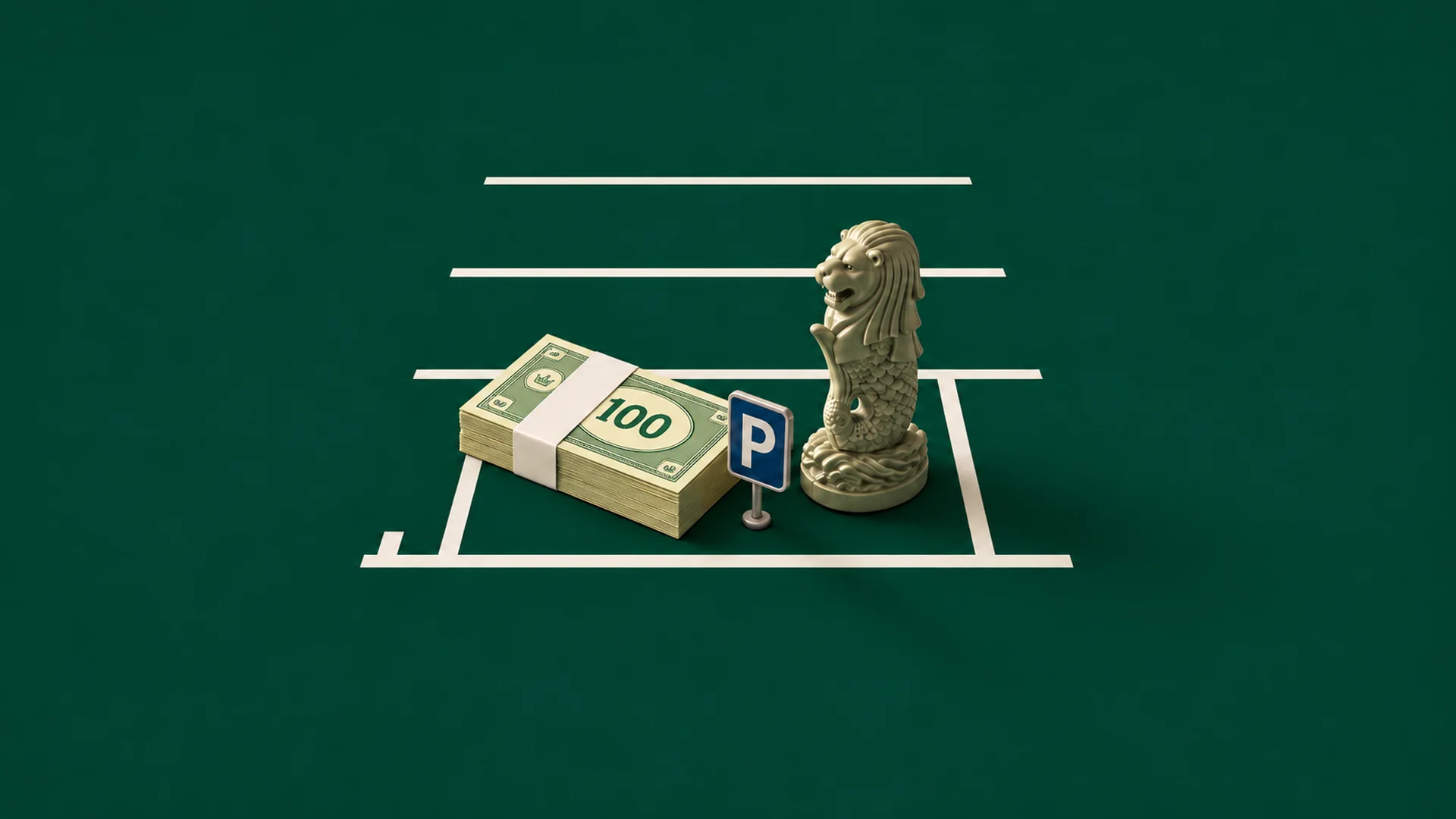
Got some spare cash and wondering where to put it? A savings account, T-bills, or something else? There's no single best place to park your cash in Singapore. The right option depends on what the money is for, how soon you might need it, and how much risk you're comfortable with in exchange for returns.
In this guide, we compare six common low-risk options: high-yield savings accounts, fixed deposits, Singapore Savings Bonds (SSBs), T-bills, money market funds and cash management accounts. We look at how each one works, how quickly you can get your money back, and the risks to be aware of.
Figures and rates used are correct as of 1 October 2026.
Before you choose, what is this cash for?
Start with the money's job. Is it for daily spending, an emergency fund, a goal in the next year or two, or cash that's simply sitting idle? Most cash in these categories shares four needs:
- Liquid: you can get it back quickly, within days.
- Accessible: it's easy to deposit and withdraw.
- Stable: the amount you put in shouldn't swing much in value.
- Some return: it earns something while it waits.
Each option below balances these differently, which is why the highest headline rate isn't automatically the best choice. Some products have lock-ins, fees or longer waits to get your money back.
If you're still working out how much to set aside, our emergency fund guide for Singapore walks you through it.
Quick comparison: 6 places to park cash in Singapore
Here's how the six options compare at a glance. We go through each one in detail below.
| Product | Will you get returns? | Accessibility to cash | Lock-in/Tenure | Capital protection | Typical Conditions | Best Fit |
|---|---|---|---|---|---|---|
| High-Interest (High Yield) Savings Accounts | Variable. Often tiered on conditions (salary credit, spend, bill payments, investments); rates can change anytime | Immediate; no penalty | None | Eligible SGD deposits insured by SDIC up to S$100,000 in aggregate per depositor per Scheme member | Low/no minimum balance; bonus tiers need active conditions | Full liquidity; willing to actively fulfil the conditional bonus rates |
| Fixed Deposits | Fixed at placement | Locked for the tenure; early withdrawal usually forfeits returns | Typically 1 – 36 months | Covered by SDIC up to S$100k per depositor per bank | Minimum deposit often S$1,000–S$20,000 depending on bank/promo | Cash not needed before maturity; wanting a guaranteed rate |
| Singapore Savings Bonds (SSBs) | Fixed, step-up structure | Redeemable monthly; proceeds paid by the 2nd business day of the following month | Up to 10 years; no penalty for exiting early | Singapore Government-backed | Min S$500, in S$500 increments; cap of S$200k per individual across all SSBs; need a CDP account | Government-backed safety with the flexibility to exit without penalty |
| T-Bills | Fixed at auction (cut-off yield) and known once allotted | Locked until maturity; can be sold in the secondary market but with price risk/spread | 6-month or 1-year | Singapore Government-backed | Minimum S$1,000; can be purchased using cash, SRS or CPF funds, subject to applicable requirements | Lump sums you can lock away for a set short period |
| Money Market Funds | Variable, depending on the market; not guaranteed | High | None | Not guaranteed, though volatility is historically very low | Usually no/low minimums; fees apply | Quick access with market-linked returns |
| Cash Management Accounts/Portfolios | Variable; depends on underlying assets | Usually high; depends on provider | Usually none | Not guaranteed; risk depends on underlying holdings | Varies widely by platform; often low/no minimum | Liquid cash with potential investment returns. |
1. High-yield savings account
A high-yield (or high-interest) savings account is a bank account that pays more interest than a regular savings account, and you can withdraw your money at any time without a penalty.
The catch is that the higher rate, often called the bonus rate, usually comes with conditions. You might need to credit your salary, spend a minimum amount on a linked card or keep a minimum balance, and the bonus rate may only apply to part of your balance. If you don't meet the conditions, you earn the base rate, which is similar to a normal savings account. Conditions vary a lot between banks, so it's worth checking the details.
Eligible Singapore-dollar deposits with SDIC Scheme members are insured up to S$100,000 in aggregate per depositor per Scheme member. Foreign-currency deposits, structured deposits and investment products such as unit trusts are not covered.
A high-yield savings account may suit money you need to access often or at short notice. Depending on the account’s conditions to be fulfilled, it may be great for larger sums of money that you do not need to move much as well.
2. Fixed Deposits
A fixed deposit (FD) is a bank deposit where you place a lump sum for a specified period, called a tenure, at a fixed interest rate. Because it’s a bank deposit and not an investment, your capital stays protected. However, should you withdraw it before the time is up, you risk forfeiting the returns.
Banks usually set rates by tenure, and generally the rates increase as the tenures increase. For example, a 3-month tenure might only give 0.80% p.a. while a 9-month tenure pays 1% p.a. (illustrative rates only).
The trade-off is access. Your money is locked in for the tenure, and while you can usually withdraw early, you'll typically lose the interest, which is only credited at maturity.
An alternative way to look at it is through a long-term lens. Some fixed deposits may be renewed at maturity, subject to the bank’s applicable renewal terms and prevailing rates.
Fixed deposits are great for when you have cash you know you will not need for a set amount of time, and for fixed returns.
3. Singapore Savings Bonds (SSBs)
Singapore Savings Bonds are bonds fully backed by the Singapore Government, so you can always get back the full amount you invested. That's why they're considered one of the safest ways to invest in Singapore.
However, there are a few conditions to take note of.
The first is the ‘step-up’ structure for the interest rates. SSBs have a step-up structure designed to provide a higher average annual return the longer you hold them, up to 10 years. This interest is credited into your account every 6 months, and you can check each issue’s rates and the average return per year on the official MAS website.
You can redeem your SSBs in any month, with no penalty and no loss of interest already earned. Redemption requests are accepted from 6pm on the first business day of the month until 9pm on the fourth-last business day, and your money is returned by the second business day of the following month. That means it can take up to about a month to reach you. If you hold to the full 10 years, your principal and interest are credited back automatically (full redemption details).
There are limits to keep in mind. The minimum is S$500, in multiples of S$500, and you can hold up to S$200,000 across all SSBs.
Each issue also has a limited size, so in popular months you may receive less than you applied for. When that happens, bonds are allotted in rounds, a bit like dealing playing cards: each applicant gets S$500 per round until they reach the amount they applied for or the bonds run out (how oversubscribed issues are allotted).
SSBs are great for long-term horizons and those looking to preserve their full investment. They also offer a penalty-free and flexible exit.
SSB details correct as of 1 October 2026.
4. Singapore Treasury Bills (T-Bills)
Treasury bills (T-bills) are short-term securities backed by the Singapore Government, which makes them one of the safest investment options. They come in 6-month and 12-month tenures, and your money is locked in until maturity. You can sell in the secondary market before then, but the price may be lower than you expect.
Unlike a bank deposit, you can't buy T-bills whenever you like. MAS issues them through auctions: 6-month T-bills every two weeks, and 12-month T-bills typically once a quarter (see the issuance calendar). You apply through competitive or non-competitive bidding, and depending on your choice and how the auction goes, you may not get the full amount you applied for (how SGS auctions work). The minimum is S$1,000, in multiples of S$1,000, and you can bid up to S$1 million per non-competitive auction.
Instead of paying regular interest, T-bills are sold at a discount to their S$1,000 face value, and you receive the full-face value at maturity. The difference is your return. For example, if you buy a 6-month T-bill for S$985, you receive S$1,000 at maturity, a return of S$15.
Because T-bill yields are quoted on an annualised basis, a quoted 2% p.a. yield does not mean you earn 2% of your investment over a six-month holding period. Your actual dollar return over six months will be approximately half the annualised amount, subject to the applicable pricing convention.
One more thing to note is not to treat the most recent auction's cut-off yield as a permanent rate, as the yields will fluctuate based on different factors in the market and economy during each auction. A strong cut-off yield in one tranche does not guarantee the same return in the next one.
T-bills may suit cash that you can set aside until maturity and where you value Singapore Government backing and a known maturity value.
5. Money Market Funds
A money market fund (MMF) is a type of unit trust that invests in low-risk, short-term instruments such as treasury bills, commercial paper and high-quality bank deposits.
Because an MMF earns its returns from the instruments it holds, its returns aren't fixed like those of fixed deposits or T-bills. Returns are variable and generally reflect prevailing short-term interest rates and the performance of the fund's underlying instruments.
They typically accrue daily, either paid out to your account or reflected as a small rise in the fund's price. Management and administrative fees are taken from the fund's gross returns, and what's left is your net return.
Because MMFs are an investment, not a banking account, they do not carry SDIC protection, meaning your principal is not guaranteed to be returned, though the risk of loss is generally low especially compared to other types of investments.
They are also one of the most highly liquid on this list, where you can sell your investments and see the cash back in your bank account within days, typically within 1 to 3 business days, without lock-in penalties, and with whatever returns you have accumulated so far.
They do however charge management and administrative fees which are taken from the fund’s gross returns. After that, the rest is distributed to you as your net return.
Money market funds are good for those who want relatively quick access to their money, and those comfortable with low but non-zero investment risk and returns that move with interest rates.
6. Cash Management Portfolio
A cash management portfolio is generally an investment solution designed to provide relatively high liquidity while seeking returns through lower-risk, short-term investments. They offer the accessibility and flexible cash movements of a savings account but have the potential returns of a low-risk investment.
To earn those returns, the platform invests your cash in low-risk, short-term assets, which may include some of the options covered above. What they hold depends on the provider, so it's worth checking before you commit.
Because cash management portfolios can vary greatly from platform to platform, their exact fee structure, minimums, and projected returns also vary. Fees can range from fund management to platform administration and could be deducted at different stages. Projected returns may or may not be fixed, or may only apply under certain conditions, e.g. the first S$20,000.
However, liquidity for such portfolios is extremely flexible. Generally – and this once again depends on the specific platform - you can withdraw whenever and see the cash back in your account within a few business days, or even instantly. However, it may take longer (in business days) for bigger amounts.
A cash management portfolio may suit cash you want to keep accessible while it earns market-linked returns, if you're comfortable that returns and capital aren't guaranteed.
Our own ARKI Cash Bucket is an example of a cash management portfolio. It is designed for cash that you want to keep relatively accessible while seeking returns through a portfolio of lower-risk, liquid investments. The portfolio invests across cash-like instruments, money market funds, short-term government bonds, quasi-sovereign agency bonds and high-quality corporate bonds exposure through bond funds. Find out more here.
How do the options match different types of cash?
The best fit depends on when you might need the money. Here's which features matter most in a few common situations, and which of the six options have them.
#1 You might need the money tomorrow
For emergencies or expenses that you know are coming, just not when.
Your most pertinent requirement then would be liquidity, where you can get the cash either instantly or within mere days without lock-ins or where you would forfeit your returns or pay a penalty if you were to withdraw early.
Good to know: Consider HYSA, Cash Management Portfolios or MMFs.
#2 Your emergency fund
This is the 3-6 months’ worth of living expenses. You’ve got the cash, but you don’t know when you’re going to need it. Your main requirement would be to keep it somewhere earning, but still accessible quickly during unforeseen events like sudden job transitions or medical emergencies.
Good to know: A dual method could work, where you keep 1-2 months of expenses in a HYSA or Cash Management Portfolio for quick access, and park the remainder in an MMF.
#3 You have an incoming expense in 6 months
Your main focus will be preserving capital with returns. Since you know roughly when the expense will be, liquidity will be secondary so you should have enough time buffer for a lock-in.
Good to know: Consider 6-month T-bills, Fixed Deposits (FDs), or even SSBs.
#4 You’ve got cash sitting and waiting for an investment opportunity
Depending on if it’s a lump sum or a pool for dollar-cost averaging, your main need will be liquidity that’s almost instant and agile.
Good to know: Consider Cash Management Portfolios, HYSA or MMFs.
#5 You’ve got money that can sit untouched for a few years
Your focus then would be earning steadier returns over a longer period, while still preserving your capital, if you’re not considering equity-based investments.
Good to know: Consider Singapore Savings Bonds (SSBs), MMFs or FDs.
What to compare beyond the headline rate
A high rate looks attractive, but it isn't the only thing that matters. Before you decide where to put your cash, check:
- Conditions and caps: Read the T&Cs. Minimum balances, spending requirements, caps on how much earns the higher rate, or a lock-in may rule an option out for your needs.
- Rate certainty: Would you prefer a lower fixed rate, or a potentially higher rate that moves with the market? Sometimes a "good enough" rate you're comfortable with beats the highest one.
- Redemption timing: How long does it take for the money to reach your bank account after you ask for it back? Instantly, within a few days, or up to a month, as with SSBs?
- Lock-in periods: Fixed deposits and T-bills tie up your money until maturity. Withdrawing a fixed deposit early usually means giving up the interest, and selling a T-bill early may mean a lower price. SSBs can be redeemed in any month without penalty.
- Fees: Look for fees that aren't obvious, and how they affect your return. The cheapest option isn't always the best fit if a slightly higher fee gets you better access.
- Protection and guarantees: This is the ageless consideration in investing: the balance between how secure your initial investment is (risk), versus how high a yield you can potentially get (returns). Thus, the classic saying: high risk, high rewards. For money that you may need to use, preserving it could be slightly more important than higher yields for you – growth should comprise a separate part of your personal portfolio. Products backed by the Singapore Government, such as SSBs and T-bills, carry the credit risk of the Singapore Government and are generally regarded as having very low credit risk.
- Minimum balance thresholds: Check whether a minimum balance would limit how much you can withdraw, especially in an emergency.
- Administrative effort: This may not be one of your first considerations, but it is still an important factor to think about as this determines how easily you can access your cash (as opposed to how fast). If you need this money in a pinch, is it just a few taps on your phone away, or will it require applications and forms that can only be submitted within specific time frames? And if the money is not for emergencies, is this level of effort worth the returns for you?
The bottom line
The best place to park your cash is the one whose risk level, liquidity and access, and returns best match your needs. Sometimes, depending on what they are, some of your ideal factors like a certain amount of returns may need to give way to other more important factors like ease of access. A way to know for sure is to make a list of your requirements and use that, together with our checklist above, to compare your options.
Why not consider ARKI Cash as part of your options? Not only do we strive to make your cash accessible while offering a target base rate of 2% p.a. on the first S$20,000 under the Arki Stability & Access Programme, this bucket forms part of Arki’s three-bucket investment framework designed to help you allocate money according to different needs and time horizons. It makes putting every dollar to work in order to match your life seasons easier and fuss-free.
The illustrated target base rate of 2% p.a. on the first S$20k and 1.85% p.a. on the next S$30k are supported under the Arki Stability and Access Programme. T&Cs apply. ARKI Cash is a managed investment portfolio, not a bank deposit or savings account. Returns from the underlying investments are not guaranteed.
In short
Disclaimer
This article is for information only and is not financial advice. It does not consider your objectives, financial situation, or needs. Investments carry risk, including the possible loss of capital, and past performance is not a guide to future returns. Arki is operated by Arche Asset Management Pte. Ltd. This advertisement has not been reviewed by the Monetary Authority of Singapore.